Home › Commercial Concrete Slabs and Flatwork
Get durable, high performance commercial concrete slabs in Denver, CO. We pour interior and exterior flatwork for warehouses, shops, retail, and loading areas. Our team focuses on proper subgrade prep, reinforcement, and finishing to meet flatness and durability requirements. Choose experienced commercial slab contractors for work that stands up to traffic and heavy use.
Superior Concrete Denver provides professional commercial concrete slab throughout Denver, CO, Colorado and the surrounding area. Our licensed, insured crew delivers safe, clean, on-time work with a free estimate before anything begins. Call (970) 648-8412 or request your free quote.
Commercial Concrete Slabs and Flatwork for Denver Businesses
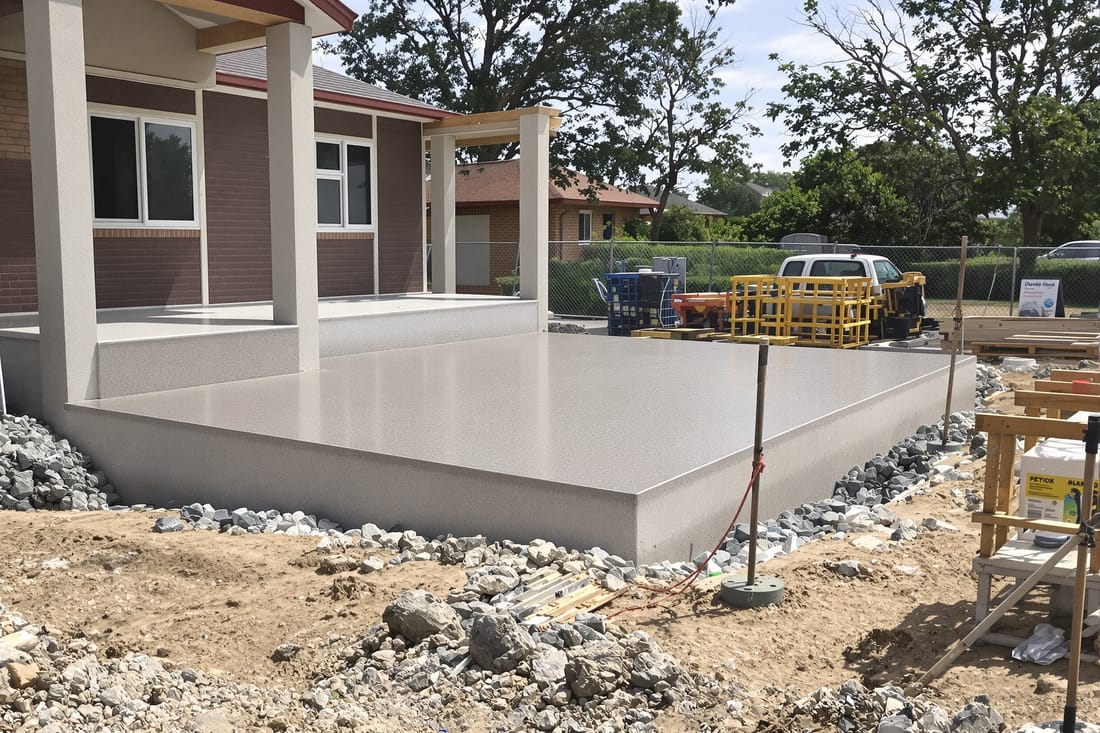
Superior Concrete Denver installs and repairs commercial concrete slabs and flatwork for properties throughout the Denver metro area. We focus on the kind of concrete work that keeps your business running: floors, loading areas, walkways, trash enclosures, equipment pads, and parking lot flatwork.
Commercial concrete slab projects in Denver have to deal with freeze-thaw cycles, expansive native soils, and elevation-related curing conditions. That affects how we design the slab thickness, reinforcement, joint spacing, and concrete mix. Our crews are used to working around active businesses, so we plan pours and saw cutting to minimize downtime for your operations.
Whether you need a new warehouse slab, a thicker pad for heavy racking or forklifts, or you are replacing broken and settled sidewalk panels, Superior Concrete Denver treats each project as its own engineering problem. We look at the loads, the subgrade, and the drainage pattern first, then recommend a slab design that fits your budget and the way your property is actually used.
How We Build a Commercial Concrete Slab in Denver
A solid commercial concrete slab starts with subgrade prep. On most Denver sites, we begin by removing soft soils, organics, and old failed concrete. We then compact the subgrade with plate compactors or rollers in thin lifts so the base will not pump or shift. For higher load areas such as loading docks or dumpster pads, we usually install and compact 4 to 8 inches of road base or crushed concrete to spread loads and improve drainage.
Next, we set forms with accurate elevations that tie into existing thresholds, pavement, and drainage structures. In Denver, slope is critical because snow melt has to move away from buildings and not refreeze at doors. We commonly pour flatwork with slopes between 1 and 2 percent toward drains, alleys, or parking lots, and we double-check this with laser levels before concrete shows up.
Reinforcement is selected based on use. Light commercial sidewalks might only need fiber-reinforced concrete and proper joints. Warehouse slabs, vehicle traffic areas, and equipment pads typically get #3 or #4 rebar in a grid, or welded wire mesh supported on chairs so it stays in the middle of the slab. For very heavy loads, we can work with an engineer to design thicker sections, doweled control joints, and additional reinforcement in wheel paths and column lines.
When the ready mix truck arrives, we check the batch ticket and slump, because altitude and temperature affect set time and workability in Denver. We place the concrete with chutes, buggies, or pumps, then strike it off with a straightedge or screed. After bull floating, we install control joints by hand or with early-entry saws. Proper joint spacing is key to limiting random cracking, so we follow a pattern that fits the slab thickness and layout, not just a generic grid.
Finishing depends on the use. Exterior flatwork usually gets a broom finish for slip resistance. Interior slabs may get a hard-troweled surface, densifier, or be left in a burnished finish under epoxy or polished concrete. We avoid overworking the surface, which traps bleed water and can lead to scaling under winter de-icing salts.
Mix Design, Local Conditions, and Durability
Denver’s climate changes fast, so picking the right concrete mix and timing is important. For exterior commercial concrete slabs, Superior Concrete Denver typically specifies air-entrained mixes in the 4000 to 4500 psi range. Air entrainment helps the slab survive freeze-thaw cycles and de-icing chemicals that are common around commercial entries and parking areas.
On hot summer days or high wind days on the Front Range, concrete can lose moisture too quickly. We manage this by adjusting mix temperature, scheduling earlier pours, and using set control admixtures when needed. On cold mornings, we may use accelerators, insulating blankets, or temporary heat to keep the slab within an acceptable curing temperature so it gains early strength without freezing.
If your project involves forklift traffic, pallet jacks, or high-bay racking, we look at point loads and repetitive loading rather than just overall slab thickness. In some cases, we will recommend upgraded aggregate, surface hardeners, or a higher psi mix, because repairing a commercial slab that is curling or wearing out under traffic is far more disruptive than spending a little more on the right mix up front.
De-icing practices in Denver also affect long-term performance. We design exterior slabs with proper air content and curing, then we explain realistic expectations about minor hairline cracking and surface wear. For critical areas like vehicle approaches and dumpster pads, we may recommend thicker sections, doweled joints, and sealed surfaces to hold up better to salt, snow removal equipment, and heavy turning movements.
What Drives Cost for Commercial Concrete Slabs and Flatwork
Commercial concrete slab pricing is driven by more than just square footage. One major factor is site access. If concrete trucks can back directly to the forms, costs are lower. If we need line pumps, boom pumps, or extensive buggy work because of tight alleys or downtown Denver sites, that adds labor and equipment time.
Existing conditions also matter. Removing thick, reinforced, or badly cracked concrete can be slow, especially when there are buried utilities or tight working hours dictated by the city or your tenants. Poor subgrade that needs extra excavation and base material will add cost, but skipping that step is usually why slabs fail early, so we show you exactly what we find during prep.
Load requirements and finish type are another cost driver. Light-use sidewalks with a broom finish are relatively straightforward. A high-tolerance interior slab for racking or machinery, with tighter flatness and levelness requirements, requires more time in layout, screeding, and finishing. Add-ons like dowels, edge thickening, vapor barriers, slab insulation, and surface hardeners all have specific material and labor costs that we line item on our estimates.
Schedule and phasing can affect pricing on commercial properties. If work has to happen at night, on weekends, or in multiple small pours to keep areas open to customers and tenants, mobilization costs go up. At Superior Concrete Denver we plan phasing carefully, for example alternating sidewalk sections to keep at least one path open, or staging warehouse slab pours so you can keep inventory accessible while new areas cure.
Common Problems, Repairs, and How to Hire the Right Contractor
The most common problems we see on older commercial concrete slabs in Denver are uneven settling, random cracking, spalling from de-icing salts, and ponding that turns into ice. Many of these issues trace back to poor subgrade prep, lack of joints, or improper curing. On evaluations, we check elevations, look for drainage patterns, and often core drill or demo small sections to see what base material is underneath.
For repair projects, Superior Concrete Denver might remove and replace only the failed panels, tie new slabs into existing ones with dowels, and correct slopes so water finally drains. If the slab is structurally sound but uneven, we can sometimes grind high spots, fill low spots with repair mortars, and apply coatings. When damage is widespread or the base is saturated and pumping, full-depth replacement is usually the more reliable long-term solution.
When you hire a contractor for a commercial concrete slab, ask for details on subgrade prep, reinforcement, concrete mix, joint layout, and curing plan. A vague answer such as “standard 4 inch concrete” is a red flag for any area that sees vehicles or heavy carts. You should see a written scope that calls out slab thickness, base depth, rebar size and spacing, psi strength, and finish type that match how your property is used.
Local familiarity helps with logistics too. In Denver, timing around afternoon storms, coordinating with local ready mix plants, understanding city inspection steps, and knowing how CDOT and city sidewalks tie-ins must be handled all affect how smoothly a project runs. Superior Concrete Denver brings that on-the-ground experience so you get a slab or flatwork project that passes inspection, drains correctly, and holds up to everyday use without constant patching.