Home › Concrete Foundations and Footings
Build on a solid base with professionally installed concrete foundations in Denver, CO. We pour footings, stem walls, and foundation slabs for new homes, additions, and garages. Our crew follows engineered plans, proper reinforcement, and local codes to deliver straight, level, and structurally sound foundations. Protect your investment with concrete foundations and footings installed by experienced professionals.
Superior Concrete Denver provides professional concrete foundations throughout Denver, CO, Colorado and the surrounding area. Our licensed, insured crew delivers safe, clean, on-time work with a free estimate before anything begins. Call (970) 648-8412 or request your free quote.
Concrete foundations in Denver that are built for our climate
Denver is tough on concrete foundations. We have big temperature swings, freeze-thaw cycles, and a lot of expansive clay soils that like to move around when they get wet or dry out. Superior Concrete Denver designs and pours concrete foundations and footings specifically for these local conditions so your home or building stays level and crack free as the ground shifts.
When you call us about concrete foundations, we start with a site visit, not a guess. We look at access, slope, existing structures, drainage patterns, and the native soils that are actually on your lot. If there is a recent geotechnical (soils) report from your engineer, we build our footing and foundation design around that. If not, we can coordinate with a local engineer who knows Front Range soils so you are not relying on a one size fits all design pulled from a generic plan book.
We routinely handle foundations for new homes, additions, garages, shops, ADUs, and structural slabs for outbuildings in and around Denver. Whether you are in an older neighborhood with tight alleys or on the edge of town with wide open access, we tailor the plan to your specific site instead of forcing you into a standard package. That is how Superior Concrete Denver avoids a lot of the settlement and cracking you see around the metro area.
How Superior Concrete Denver actually builds foundations and footings
Our process for concrete foundations and footings in Denver is straightforward, but it is detailed and intentional.
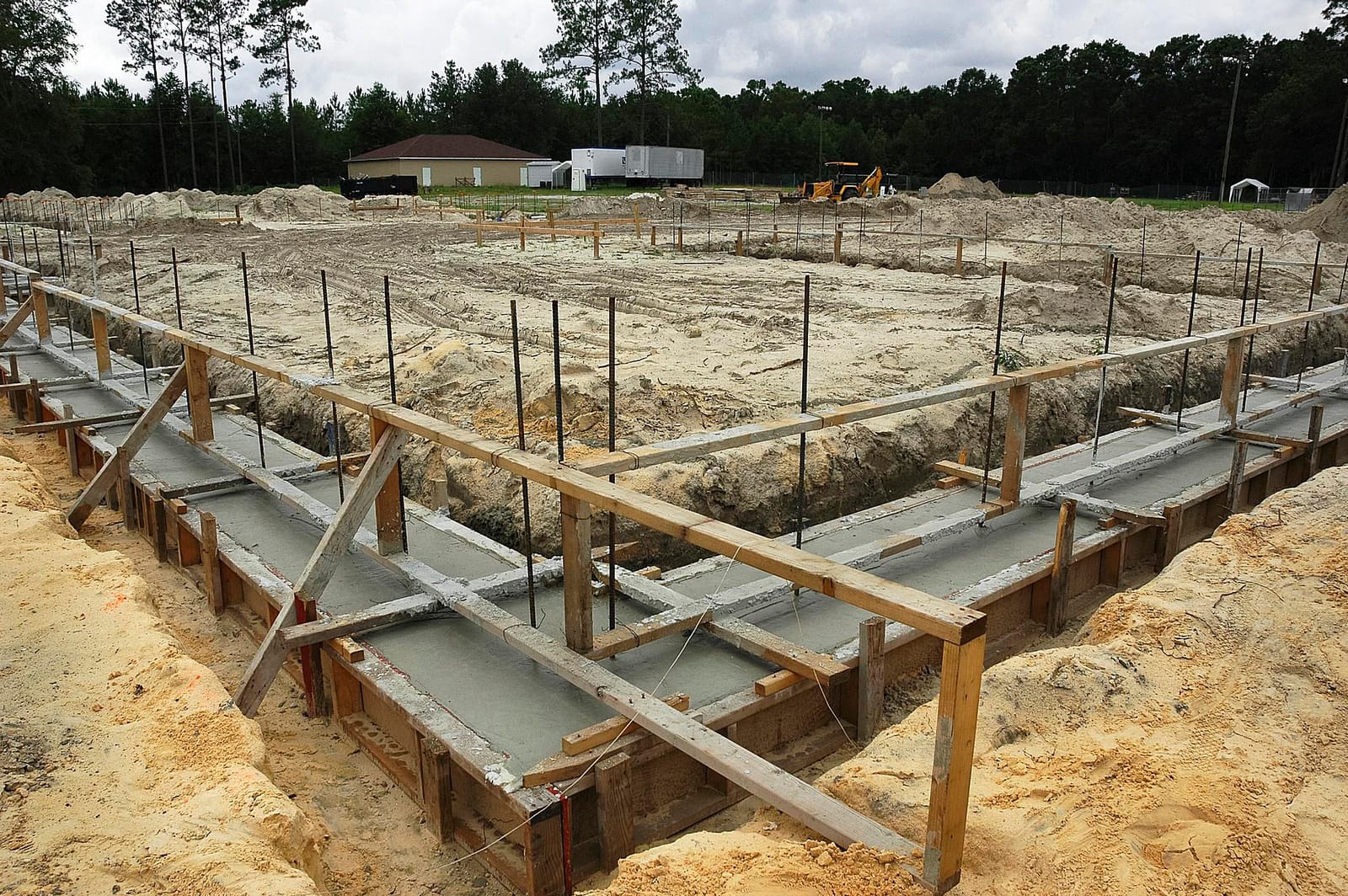
Layout and excavation: After confirming your plans and elevations with your builder or engineer, we set control points and string lines so every footing and wall goes exactly where it belongs. Then we excavate to the engineered depth, taking into account local frost depth (typically 30 inches minimum around Denver) and any code requirements for your jurisdiction. We keep sidewalls as clean and stable as possible so the subgrade under your footing is undisturbed and strong.
Subgrade prep and forms: We compact the soil under the footings and, where needed, add and compact structural fill or gravel to achieve a uniform bearing surface. Then we build footing forms to the exact width and thickness specified, using stakes and bracing that will not move while we pour. For stem walls or basement walls, we install sturdy wall forms and double check wall thickness, height, and alignment before any concrete shows up.
Rebar and reinforcement: Our crew installs steel reinforcement according to the engineered design. That usually means continuous rebar cages in footings, vertical and horizontal bars in walls, and dowels for tying slabs into foundations. We tie and chair the rebar so it sits at the correct elevation and does not end up on the ground when the concrete is placed. In expansive soils or on sloped sites, we often add extra rebar or special details that keep your foundation locked together.
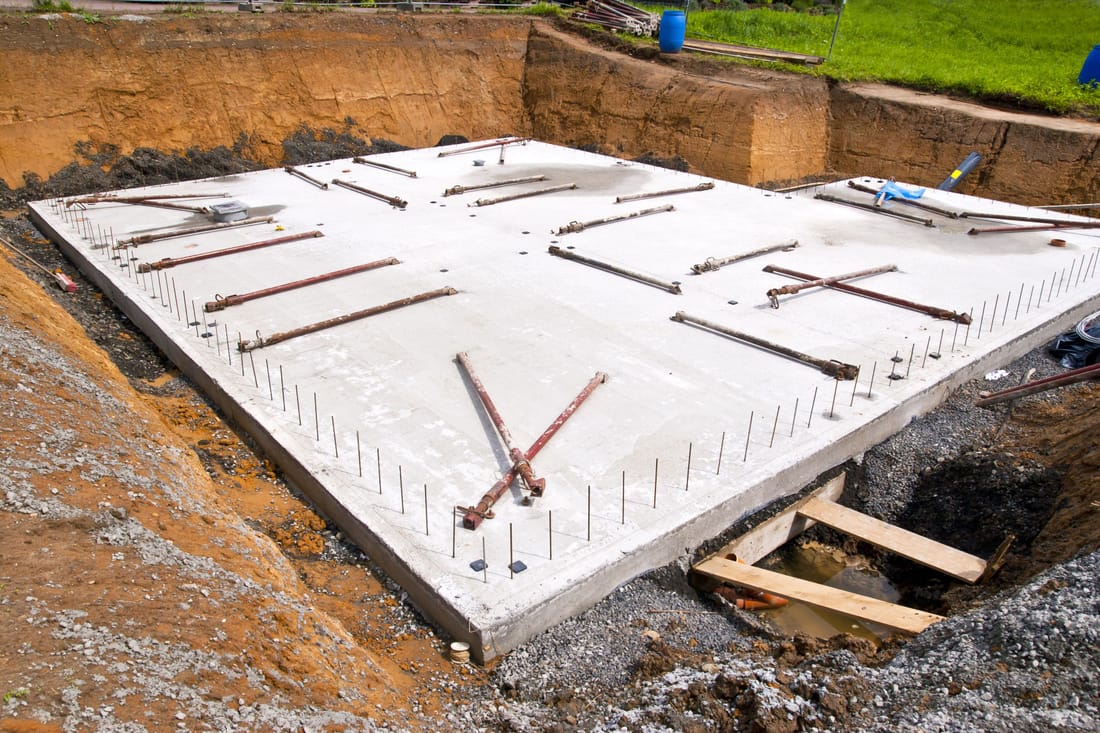
Concrete placement and finishing: We order the right mix and slump for foundations and footings, not a generic mix. Then we pour in steady lifts, vibrate the concrete to consolidate it, and strike the tops to the correct elevation. Footing tops are finished flat for walls to sit on. Wall tops are leveled carefully so framers can start straight and true.
Strip and backfill: After the concrete reaches sufficient strength, we remove forms, inspect for honeycombing or defects, and patch any needed areas. We only allow backfilling when the walls have enough cure time and strength so they are not pushed inward by dirt. Backfill is compacted in lifts to reduce future settlement along your foundation.
Material options and cost factors for concrete foundations
Every foundation is a little different, but there are some common drivers of cost and material choices that Denver property owners often ask about.
Concrete mix and strength: In metro Denver, we normally use mixes in the 3,000 to 4,000 psi range for residential foundations, and higher strengths when specified by an engineer. We often recommend air entrained concrete for exterior footings that may experience moisture and freeze-thaw exposure because it helps resist surface scaling and cracking. Higher strength and specialty mixes cost more, but they may save you headaches if you have poor soils or higher structural loads.
Rebar content and hardware: More steel means more cost, but also more crack control and long term stability. Homes with large window openings, walkout basements, point loads from beams, or tall retaining conditions almost always require additional rebar, anchor bolts, straps, and possibly hold downs to meet code and engineering. We provide clear, line item estimates so you can see how these requirements affect your price instead of hiding them in a lump sum.
Site access and excavation: Narrow city lots, overhead power lines, or limited alley access can require smaller machinery or more hand work, which affects labor time. Deep basements, walkout conditions, or over excavation for poor soil will also change the excavation portion of your price. At Superior Concrete Denver, the first thing we do is evaluate how we will actually get machines and concrete trucks in and out so there are no surprises later.
Waterproofing and drainage: If part of your concrete foundation creates a basement or crawlspace, you will also decide on waterproofing and drainage options. These can include spray or roll on waterproofing, dimple board, footing drains (perimeter drain tile), and sump pits. Denver has periods of very dry weather followed by sudden heavy storms, so handling water correctly around your foundation is critical. These options will add to cost up front but can prevent much more expensive water problems later.
Common Denver foundation problems and how we prevent them
Across the Denver area, we see a consistent set of issues with older or poorly installed concrete foundations and footings. Our approach is built around avoiding those same pitfalls on your project.
Cracking from expansive soils: Large seasonal moisture changes cause Front Range clays to swell and shrink, which leads to cracks and movement if the foundation is not designed for it. We work with engineering that takes these soils into account, use proper footing sizes, include adequate rebar, and make sure drainage keeps water from collecting around your foundation. We also pay attention to uniform moisture conditions around the structure, which is a detail many installers ignore.
Frost heave and shallow footings: Some older structures have footings that were poured too shallow or on disturbed, uncompacted fill. Denver building codes now require minimum frost depth, and we stick to or exceed those depths, even if it means more excavation. We also make sure the soil under your footings is compacted, clean, and consistent before concrete ever hits the forms.
Improper drainage and water pressure: Hydrostatic pressure from trapped water can bow walls or push water into basements. Our foundations are laid out together with surface grading, downspout extensions, and subgrade drainage. When specified, perimeter drains are installed with washed rock and fabric to keep them working long term, not just for the first few years.
Cold weather pours: Denver can turn cold suddenly, which can harm curing concrete foundations. If we are pouring in colder months, we plan for blankets, heated enclosures, adjusted mix designs, or schedule adjustments to keep your foundation curing correctly. We never treat winter pours as business as usual, and we explain the specific protections we will use before you approve the schedule.
What to expect when you hire Superior Concrete Denver
We know you are coordinating multiple trades and inspections on your project, so our goal is to make the concrete foundations and footings portion as predictable as possible.
Clear upfront planning: We review plans, confirm elevations, and coordinate with your general contractor, engineer, or architect. You receive a written scope that spells out footing sizes, wall heights, rebar details, and any waterproofing or drainage components. That way you can compare what different bids are really including instead of trying to decode vague descriptions.
Realistic scheduling: In Denver, weather, inspections, and concrete plant capacity can all impact timing. We build a schedule that considers local inspection lead times, the likelihood of afternoon thunderstorms in certain seasons, and any HOA or neighborhood access limits. We keep you informed if weather requires a shift so framers and other trades can adjust.
On site communication: Our foreman walks the project with you or your builder before we pour, so you can confirm door openings, window wells, step locations, and anchor bolt layouts. If we spot a conflict between the plan and reality in the field, we flag it early instead of silently guessing and creating issues down the road.
Final walk and documentation: After forms are stripped and any waterproofing or drains are in place, we do a final walk with you when possible. We point out locations of key features like cleanouts, sump pits, and sleeve locations for utilities, since many of these details will be covered up later. We can also provide photos or notes for your records, which is especially helpful for future renovations or resale disclosures.
If you are planning a new build, addition, or garage in the Denver area and want concrete foundations that match our climate and soils, Superior Concrete Denver is ready to help you plan it right from the start.