Home › Concrete Slab Foundations and Flatwork
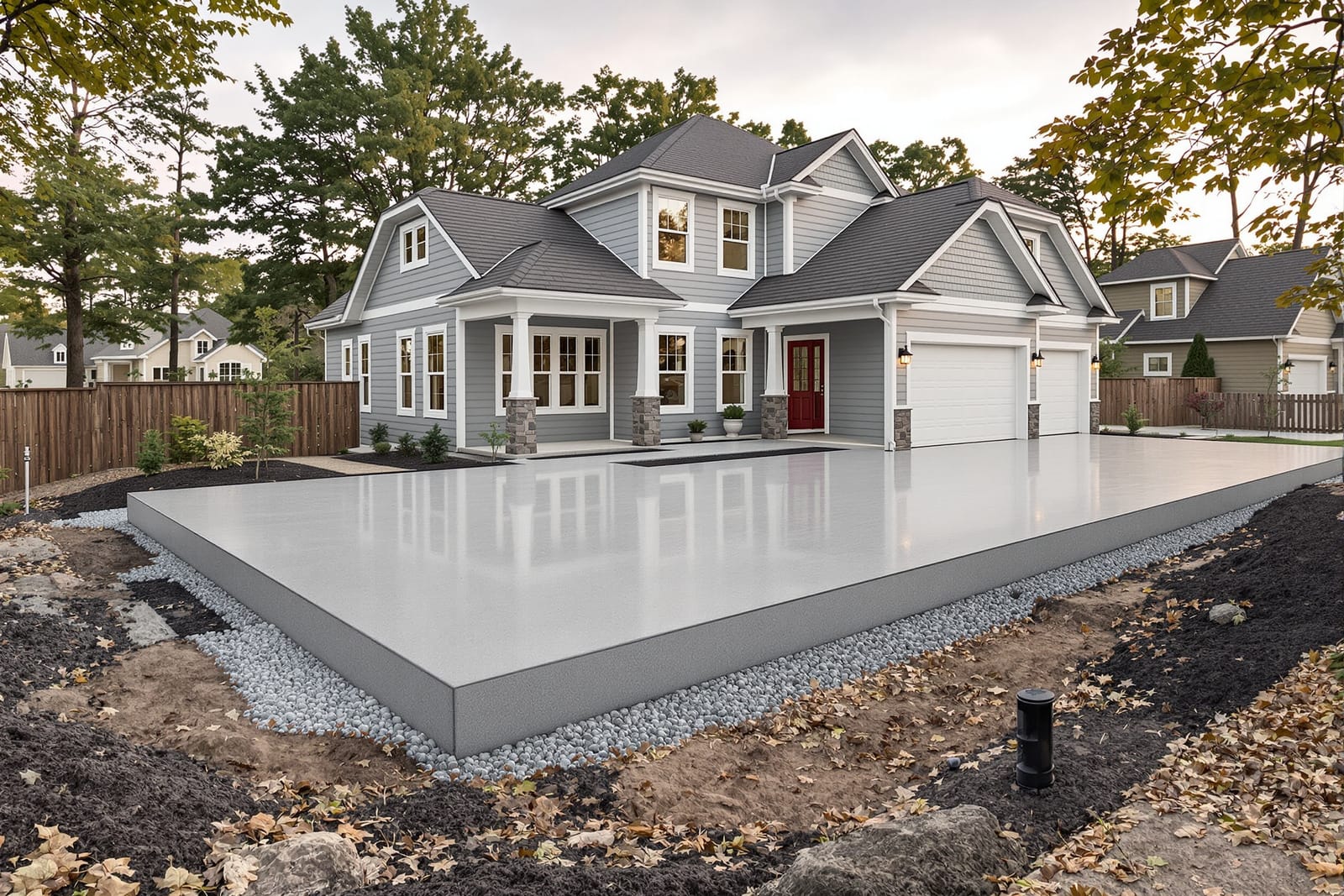
We provide concrete slab foundations and flatwork in Denver, CO for garages, sheds, additions, and more. Our team handles excavation, base preparation, vapor barriers, and reinforcement so your concrete slab stays level, resists cracking, and supports your structure or outdoor space reliably.
Superior Concrete Denver provides professional concrete slab throughout Denver, CO, Colorado and the surrounding area. Our licensed, insured crew delivers safe, clean, on-time work with a free estimate before anything begins. Call (970) 648-8412 or request your free quote.
Concrete slab work in Denver that holds up to real life
Concrete slab foundations and flatwork look simple on the surface, but the long-term performance comes from what you do before the truck ever shows up. At Superior Concrete Denver, we start every slab project by looking at three things specific to the Denver area: native soil, drainage, and freeze-thaw exposure. Our Front Range soils can range from stable gravelly material to expansive clay that swells when wet and shrinks when dry. We inspect and, when needed, coordinate compaction tests or simple probe checks so your slab is not sitting on soft or moving ground.
We also look carefully at how water will move around your site. Denver gets sudden cloudbursts, fast snowmelt, and occasional long dry spells. All of that affects a concrete slab. Before we form anything, we plan slope away from your house or building, set finish elevations, and, if needed, recommend French drains or surface drains to keep water from getting under the slab and freezing. This is one of the biggest factors in how long a slab foundation or driveway lasts in Colorado, and it is often skipped by low-bid contractors.
From there we talk about how you plan to use the slab. A basement or garage foundation slab is designed differently than a backyard patio, RV pad, or shop floor. Loading, cure time expectations, and finish type all play into the concrete mix we specify, the reinforcement we choose, and the joint layout we design. That front-end planning is what lets your slab actually match how you will live and work on it.
How Superior Concrete Denver builds slab foundations that stay level
For slab foundations, the base is everything. After excavation and rough grading, we install and compact a granular base, usually 4 to 6 inches of road base or similar material, in thin lifts. In parts of Denver with more expansive clay, we may increase that depth or recommend a moisture-conditioned base. A properly compacted base reduces settlement and helps spread loads more evenly so your slab is less likely to crack or tilt.
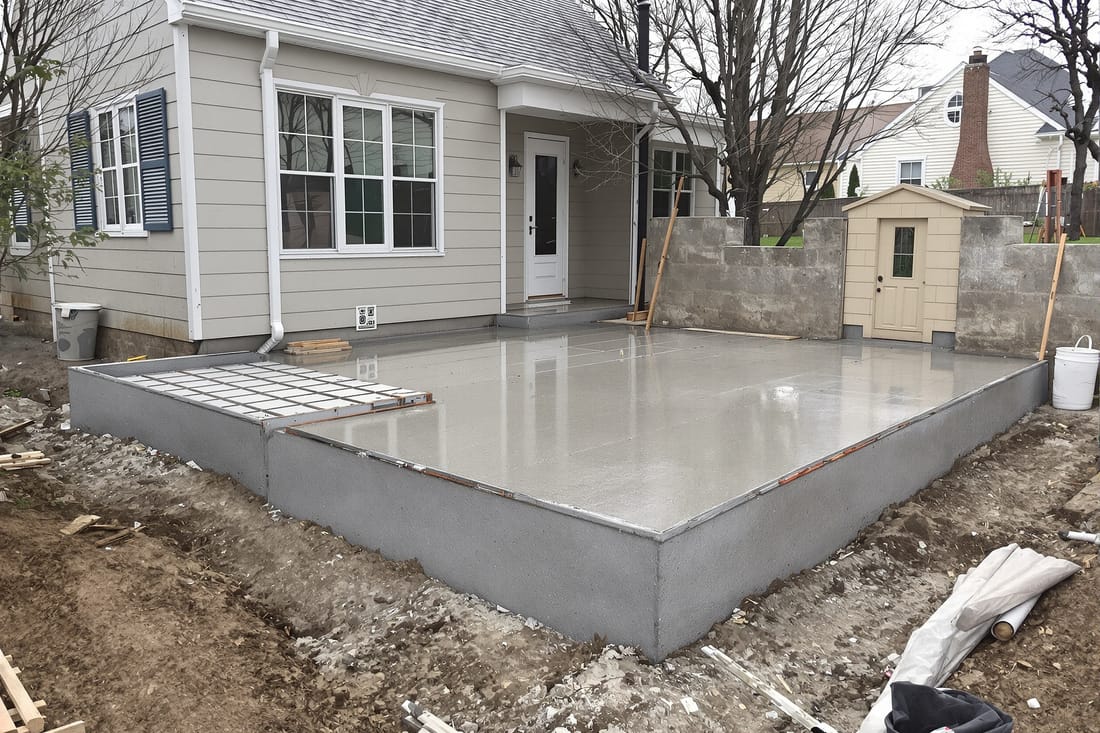
We then set forms to exact elevations using laser levels, not just string and guesses. This is where your finished floor height, step heights, and door thresholds are locked in. For interior slab foundations, we coordinate with plumbers and electricians so all under-slab utilities are in place and pressure tested before we pour. Fixing a missed drain after a foundation slab goes in is one of the most expensive mistakes a homeowner can face.
Reinforcement is matched to the structure. For typical residential foundation slabs we use a grid of rebar tied and supported on chairs so it is held in the middle of the slab, not thrown on the ground. For some garage slabs or lighter applications, a combination of rebar at key locations and fiber-reinforced concrete can be appropriate. We also cut or form control joints in a planned pattern so that when the concrete inevitably moves slightly due to temperature and shrinkage, it cracks along those joints instead of randomly across the surface.
During the pour, we place a high quality concrete mix that meets or exceeds local code requirements, usually 3,500 to 4,000 psi for residential slab foundations in Denver. We pay close attention to water content. Adding too much water on site makes finishing easier for a few minutes but weakens the slab for decades. Our crews use mechanical vibration or rodding to remove air pockets around thickened edges or footings and then finish the surface to suit your needs, from a lightly broomed texture for garages to a smooth troweled finish for interior floors that will receive floor coverings.
Flatwork: driveways, patios, walkways, and shop floors that handle Colorado weather
Flatwork covers everything from driveways and sidewalks to patios and shed slabs. The process is similar to a foundation slab but the details matter more than most people realize. With Denver’s freeze-thaw cycles, the top couple of inches of soil move around a lot. That is why we focus on base depth, moisture control, and joint layout for every flatwork job.
For driveways we typically install 4 inches of compacted base and 4 inches of concrete at a minimum. For heavy use, such as work trucks or RVs, we often recommend 5 to 6 inches of concrete and upgraded reinforcement. For patios, thickness may vary depending on whether you are supporting a hot tub, outdoor kitchen, or just seating. We go over these loading questions with you so cost lines up with actual use rather than a generic one-size slab.
Finish options for flatwork are where you can customize both looks and performance. A standard broom finish gives the best traction in snow and ice, which matters for sloped driveways in Denver. We can also provide light decorative touches, like border cuts, sand finish, or simple color additives that hold up well in our strong sun. If you want stamped concrete, we will be honest about how it weathers here and what maintenance will be required so you do not end up surprised a few winters later.
Drainage detailing is crucial. We pitch driveways away from the house and toward the street or dedicated drainage lines. For patios, we design slopes subtle enough that furniture sits level but water never ponds. In areas that see drifting snow or constant shade, we sometimes suggest a slightly more aggressive slope or a different surface texture to reduce icing risks. These are the small local decisions, based on Denver conditions, that keep flatwork safe and durable instead of just looking good on day one.
Cost, timelines, and what drives your concrete slab price in Denver
There is no honest flat rate for a concrete slab, because several local and project-specific factors drive cost. At Superior Concrete Denver, we break your price down so you can see where your money is going. The main drivers are thickness, square footage, site access, base preparation requirements, and reinforcement type.
Thickness and reinforcement are straightforward. A 4 inch patio with fiber mesh and simple control joints costs less than a 6 inch garage slab with a tight rebar grid and thickened edges at the perimeter. Site access can quietly add cost. If we cannot get a concrete truck near the forms because of tight alleys or landscaping, we may need a concrete pump or more labor to move material, which we will flag up front. In older Denver neighborhoods with narrow streets, this comes up often.
Base preparation can swing the budget more than any other line item. If your existing soil is well compacted and drains well, we can use a standard base depth. If we find soft spots, organic material, or poorly compacted fill, it is cheaper in the long run to remove and replace that material now rather than have your slab settle or crack later. We will show you these conditions before we proceed so you understand each recommendation.
Timeline is usually a few days of active work spread out. Day one is excavation and base, day two is forming and reinforcement, day three is the pour, then we allow a minimum curing period before heavy use. In summer heat or during cold snaps, we may adjust scheduling to protect the concrete from rapid drying or freezing. We will also talk about when you can drive or park on the slab. For example, light foot traffic is usually fine after 24 hours, passenger vehicles often after 7 days, and heavy loads after 28 days, depending on mix and temperature.
What Denver homeowners should look for before hiring a slab and flatwork contractor
Concrete is permanent, and fixing a bad slab is almost always more expensive than doing it right the first time. When you talk to contractors, ask specific questions about how they handle Denver conditions. A reputable company should be able to explain how they address expansive soils, frost heave risks, and snow and ice exposure. If someone waves those questions off or only talks about price per square foot, treat that as a warning sign.
Ask how they design joints and reinforcement. You should hear something more thoughtful than “we use wire mesh everywhere.” In many cases, properly placed rebar or fiber-reinforced mixes, combined with a planned joint layout, outperform loose wire mesh that often ends up at the bottom of the slab. At Superior Concrete Denver, we provide a simple sketch or description of how your slab will be reinforced and where joints will go so nothing is a mystery on pour day.
Permits and inspections may be required for foundation slabs, new garages, additions, and certain driveway modifications within the City and County of Denver or nearby municipalities. We stay current on local requirements and can pull permits when needed or support you if you prefer to handle them yourself. Inspections, such as footing or foundation checks, are not just red tape. They help confirm that what is in the ground matches the design.
Finally, ask about curing and aftercare. Proper curing is more important in Denver’s dry climate than in many other places. We typically apply a curing compound or use wet curing methods to slow moisture loss, which increases long-term strength and reduces surface cracking. We also explain realistic expectations. Hairline surface cracks may still appear and are normal, but structural cracking, settling, or drainage problems are not. We stand behind our work and will walk you through how to spot concerns early and what maintenance, such as sealing every few years, will help your slab look and perform better over time.