Home › Commercial Foundations and Footings
We pour commercial concrete foundations and footings in Denver, CO for new buildings, additions, and equipment. Our crews follow engineered plans, place rebar accurately, and deliver high strength concrete so your commercial foundation system supports loads safely and reliably.
Superior Concrete Denver provides professional commercial concrete foundation throughout Denver, CO, Colorado and the surrounding area. Our licensed, insured crew delivers safe, clean, on-time work with a free estimate before anything begins. Call (970) 648-8412 or request your free quote.
Commercial Concrete Foundations Built for Denver Conditions
Superior Concrete Denver designs and builds commercial concrete foundations and footings that are sized and reinforced for real loads and real Denver conditions. We focus on what your building actually needs: soil capacity, structural demands, and how freeze-thaw cycles and temperature swings will affect the concrete long term.
A commercial concrete foundation is not a thicker version of a house slab. For offices, retail centers, warehouses, and light industrial projects, we coordinate with your structural engineer to match exact footing sizes, rebar layouts, anchor bolt patterns, and column locations. Our crews are used to dealing with tight urban sites along Colfax or Federal, as well as larger pads out near DIA or the tech parks.
Every project starts with understanding your geotechnical report and building plans. From there we sequence excavation, forming, reinforcement, and placement so that inspections and other trades stay on schedule. Our goal is to pour once, pass inspection the first time, and give you a foundation your building will not outgrow.
How We Install Commercial Footings and Foundations
For a commercial concrete foundation in Denver, our process is straightforward and methodical. After layout with a total station, we excavate to design depth plus room for base prep. If your soils report calls for over-excavation or replacement of soft or expansive material, we handle that before any forms go in.
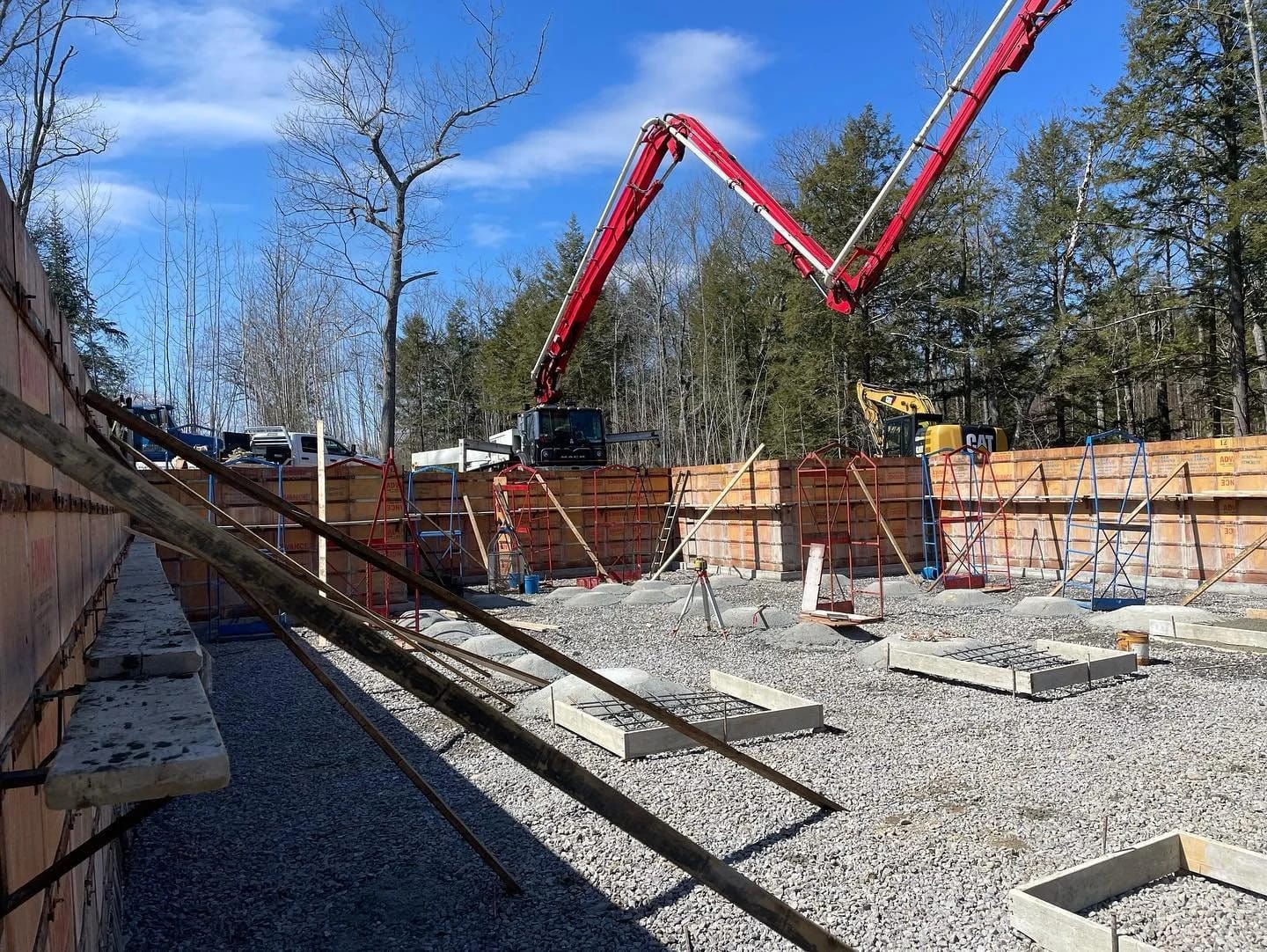
We then install and compact a granular base, typically road base or washed rock, to create a uniform, well-draining subgrade. Formwork is set for strip footings, pads, grade beams, and stem walls. We pay close attention to embed locations for anchor bolts, hold-downs, and any conduits or sleeves that must pass through the concrete so you do not have to core-drill later at extra cost.
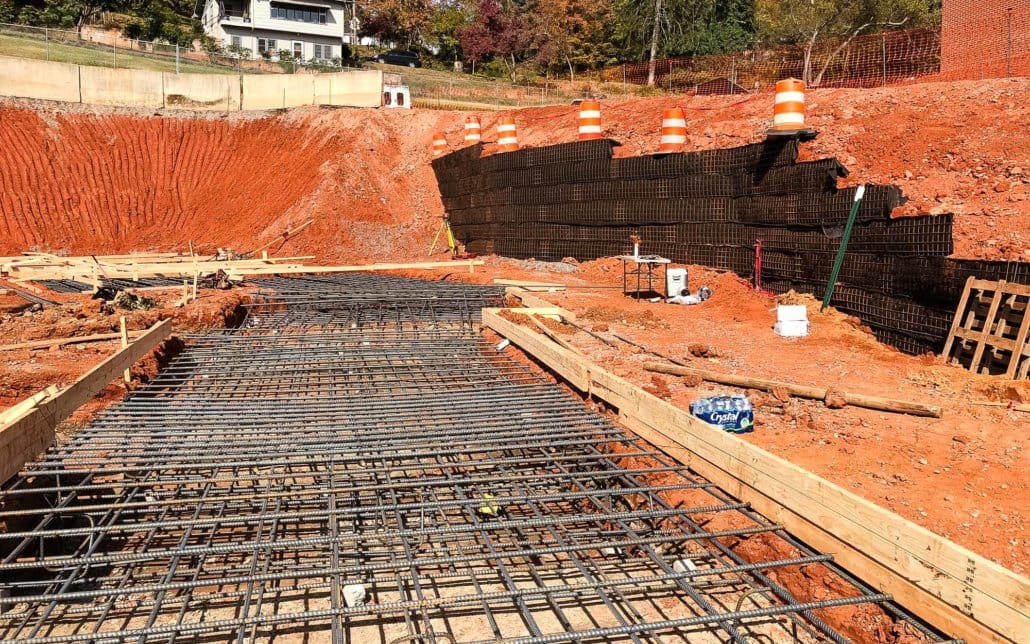
Rebar is placed and tied strictly to the engineer's schedule, including bar size, spacing, and laps. Chairs and spacers keep steel at the correct cover so it does not end up exposed or too close to soil. We coordinate rebar and form inspections with the building department so there are no surprises on pour day.
We typically use ready-mix concrete in the 4000 to 5000 psi range for commercial footings, often with air entrainment for freeze-thaw durability. For larger projects, we may use chemical admixtures that improve workability and set time in colder weather. Vibrators are used systematically to consolidate concrete, prevent voids, and ensure full contact around rebar and embeds.
Slabs on grade are laser screeded or straight-edged, then troweled to the specified finish. We cut control joints at calculated spacing or install saw cuts on a strict schedule to minimize random cracking. Curing is not an afterthought; we apply curing compound or maintain moist curing where required so the concrete reaches its design strength.
Design Options That Actually Matter for Commercial Projects
Most commercial owners in Denver have more choices than they realize when it comes to foundation design. Superior Concrete Denver works with your design team to explain what each option means in cost, schedule, and performance terms.
For foundations on variable or weaker soils, you may need thicker spread footings, continuous grade beams, or even structural slabs that span between bearing points rather than simply resting on soil. In some parts of the metro area, expansive clay is a concern. In those locations we often install void forms under grade beams or use piers to bypass unstable layers.
Reinforcement can be traditional rebar, post-tensioned cables for certain slab systems, or a hybrid. Post-tensioned slabs can reduce crack widths and allow thinner sections, but they also require special stressing operations and careful coordination. We will tell you when that system makes sense and when a conventionally reinforced slab is more practical.
You also have options for vapor barriers and moisture protection under interior slabs, which matter for offices, medical facilities, and retail spaces where floor finishes cannot tolerate moisture movement. We install high-performance vapor barriers, edge insulation where needed, and detailed joint treatments so you do not fight flooring failures a few years after move-in.
Exterior footing and foundation walls may require waterproofing or dampproofing, especially for below-grade spaces and storage. We offer spray-applied membranes, sheet systems, and drainage boards, along with perimeter drains and sump assemblies when the design calls for them.
How Denver’s Climate Affects Commercial Foundations
Denver's elevation, rapid weather changes, and freeze-thaw cycles directly affect how a commercial concrete foundation should be built and when it should be poured. Superior Concrete Denver schedules and details work with these conditions in mind so you do not lose time or durability.
Frost depth in the Denver area typically requires footings to be at least 36 inches below finished grade, and sometimes deeper based on local requirements. We set footing elevations so they are below frost line, on competent soil, and coordinated with site utilities and paving. Skipping this step can lead to heaving, settlement, and cracked walls or slabs.
Our crews are equipped for both hot and cold weather concreting. In summer, we pay close attention to mix temperature, set time, and wind so surfaces do not dry too fast and microcrack. We may adjust mix designs or place in the cooler parts of the day. In winter, we use blankets, temporary heat, and cold-weather admixtures where appropriate so concrete reaches required strength before forms and shoring are removed.
Snow, freeze-thaw cycles, and deicing salts also influence how exterior slabs, loading docks, and entry areas are detailed. We use air-entrained concrete and proper slopes so water drains away from the building. Joint sealants and surface treatments are selected with Colorado winters in mind, not just what looks good on day one.
What Drives Cost on a Commercial Concrete Foundation
The cost of a commercial concrete foundation in Denver is driven by more than yardage. Superior Concrete Denver is direct about what will raise or lower your number so you can budget realistically.
Soil conditions are a major factor. If your geotechnical report calls for over-excavation, imported structural fill, or drilled piers, those items add time and equipment. Footing widths and depths, the amount and size of rebar, and any thickened slab areas all come straight from your engineer's design. We can sometimes suggest minor design adjustments that reduce complexity without compromising safety.
Site access also matters. Tight downtown lots may require smaller equipment, more hand work, and complex pump setups. Large open sites are easier, especially for staging steel, forms, and concrete trucks. Project sequencing and required pour sizes influence mobilization costs, because every phase mobilization has a fixed cost that does not change with a few extra yards of concrete.
Finishing requirements will affect cost as well. Standard trowel finishes are more economical than highly flat or polished surfaces that require special equipment and experienced finishing crews. Additional items like thickened slab areas for heavy racking, dock pits, equipment pads, and curb and gutter are part of the concrete scope and are priced based on detail and quantity.
We provide itemized proposals that break out labor, materials, equipment, and major options. That way owners, GCs, and developers can choose where to invest and where to simplify before work begins.
What Denver Owners and GCs Should Know Before Hiring
Before you hire a contractor for a commercial concrete foundation, make sure they work at commercial scale and understand the local inspection process. Superior Concrete Denver regularly coordinates with Denver Community Planning and Development and surrounding jurisdictions, so we know what inspectors will look for at each stage.
Ask to see previous commercial projects similar in size and use to yours, such as small medical offices, flex warehouses, restaurants with drive-thrus, or multi-tenant retail shells. Foundations for these structures have different loading, plumbing, and embed requirements than residential work. We can walk you through real as-built drawings and site photos so you know exactly what to expect.
Make sure your contractor reviews your structural and civil plans in detail before bidding, not just the architectural set. Overlooked items, such as thickened slabs under demising walls, recessed entry slabs, or specific anchor layouts for rooftop units, can turn into expensive changes if they are discovered late.
Timing is another key consideration in Denver. Work with a contractor who will be honest about seasonal impacts and realistic start dates. We advise clients on optimal windows for excavation, forming, and large pours, and we plan around long-lead items like anchor bolts and reinforcement deliveries so those do not hold up the job.
If you want a straightforward, technically solid approach to your next commercial concrete foundation, we are ready to review your plans, discuss options, and provide a detailed proposal based on Denver conditions and real construction practice.